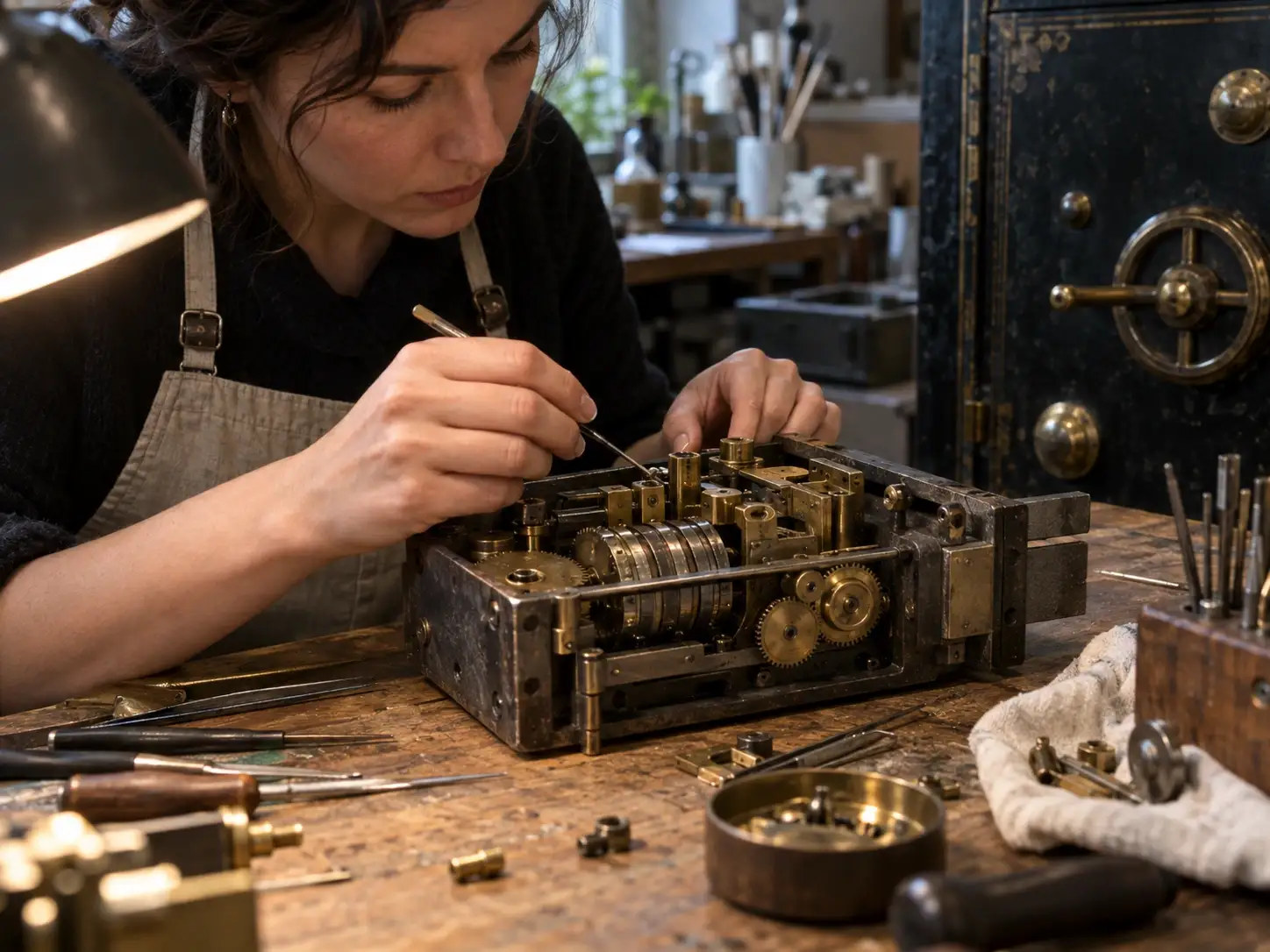
Antique furniture
Cabinets, desks and wardrobes
Fine escutcheons, narrow wards and timber around the lock are assessed together rather than treated as separate parts.
 BrasswardHeritage Access
Careful opening for antique locks, old safes, chests and closed storage where preserving the door, fittings and contents matters as much as gaining access. Start with photographs of the lock and surrounding material, then arrange an on-site inspection where the work appears suitable.
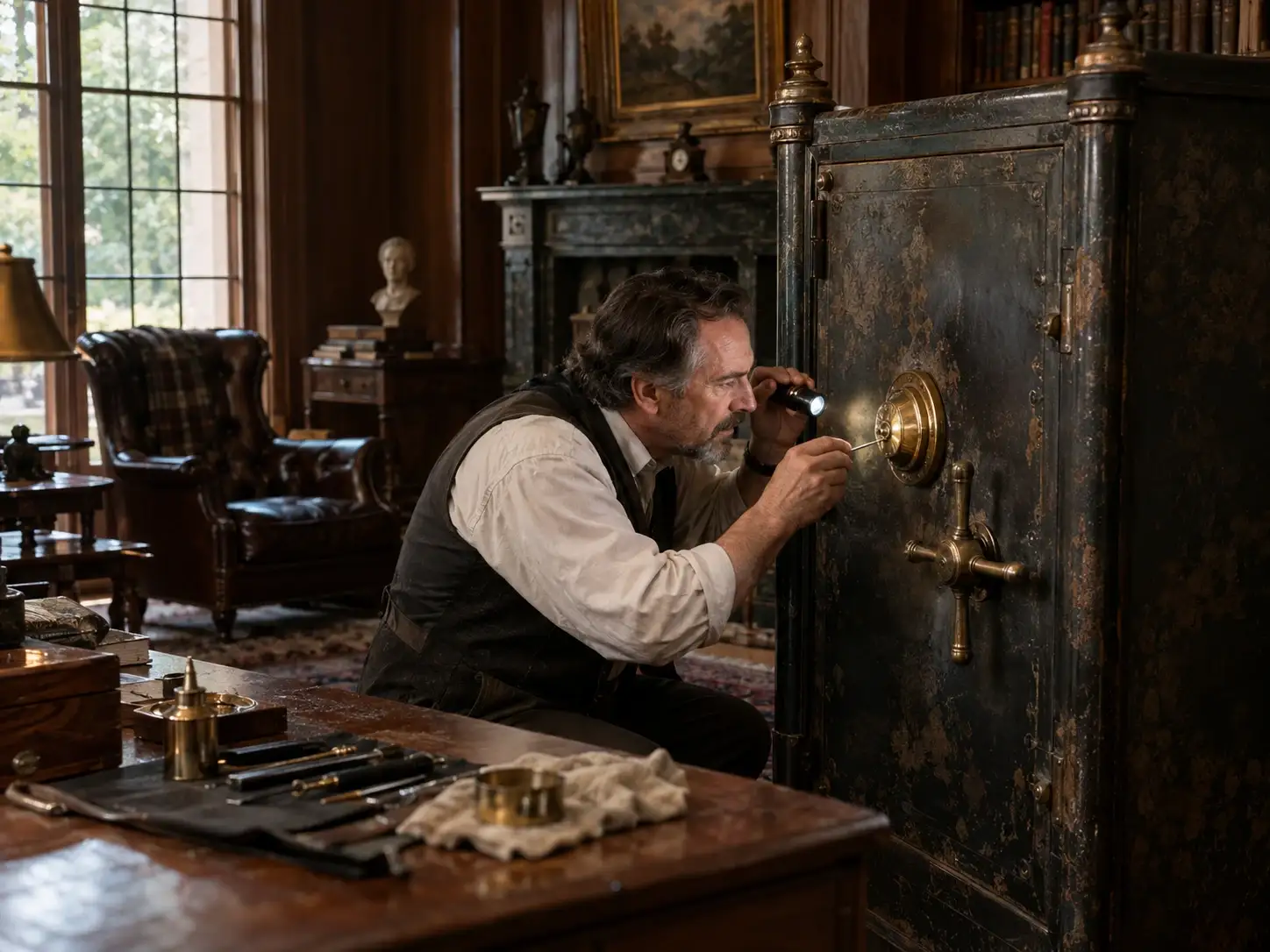
Older closures rarely fit a single category. A small furniture lock may be more delicate than a heavy safe, while a corroded chest can hide fragile hinges or irreplaceable hardware.
Fine escutcheons, narrow wards and timber around the lock are assessed together rather than treated as separate parts.
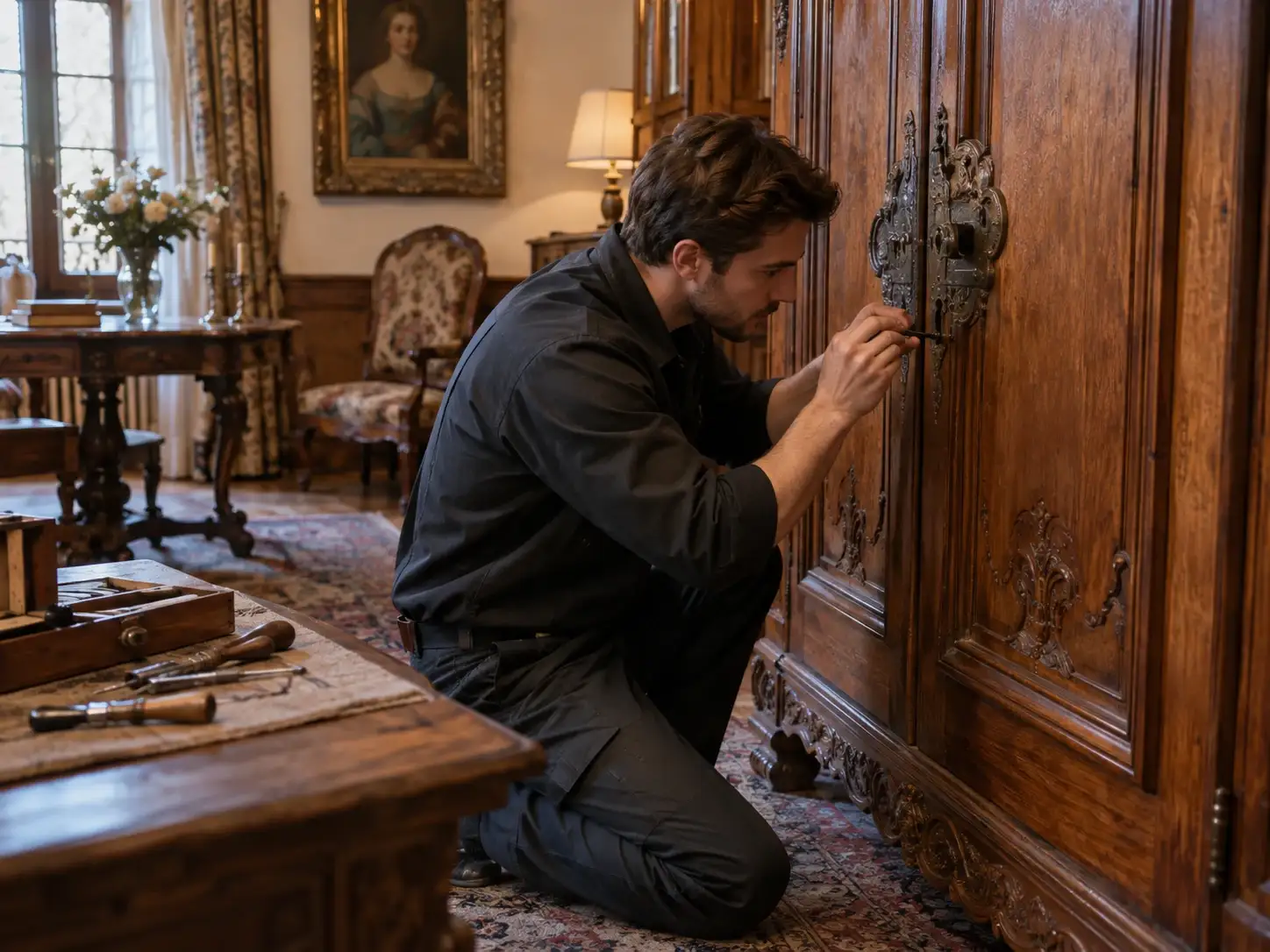
Door construction, bolt condition and available access points shape the opening plan.
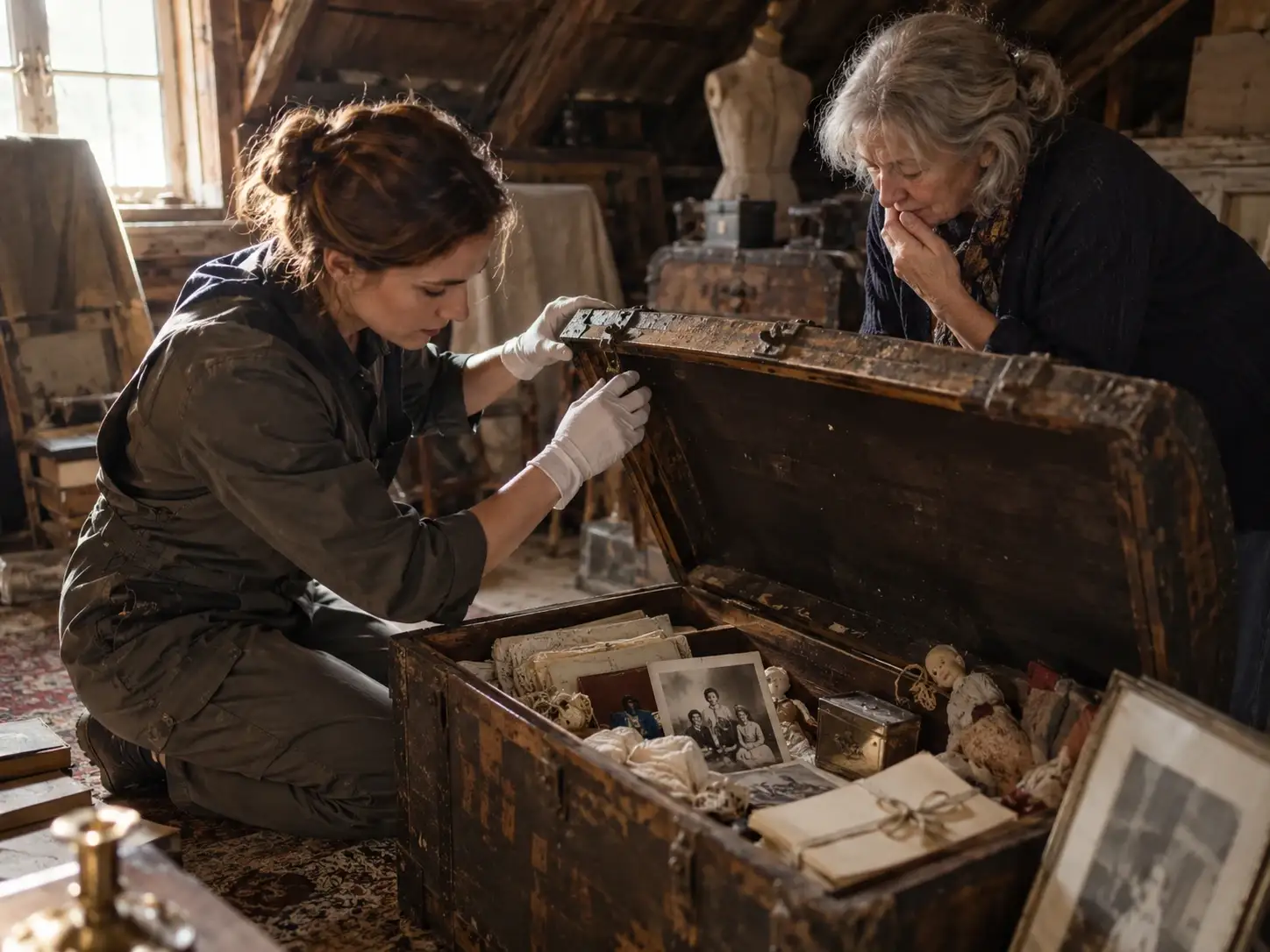
Particular care is taken where aged timber, leather, brass or ironwork may be brittle.
 Photo
assessment
Photo
assessmentA straight-on view of the lock, a wider image of the whole door or container, and a side or detail view can reveal the mechanism family, visible damage, previous drilling or repairs, and whether a preservation-focused approach is realistic.
Share clear images and tell us what the lock belongs to, where it is located and what you know about its history.
The visible mechanism, materials and access conditions are considered before an on-site visit is proposed.
Before opening work begins, the person requesting access must show an appropriate right to the property, container or premises.
On site, the specialist confirms the likely opening method, preservation risks and scope before proceeding.
Old safes and closed storage can contain personal, estate or protected material.
We may ask for documents or other evidence that reasonably demonstrates ownership, authority from an owner, estate authority, tenancy or another lawful basis for access. If the right to open the item cannot be established, the work may be declined or paused until the position is clear.
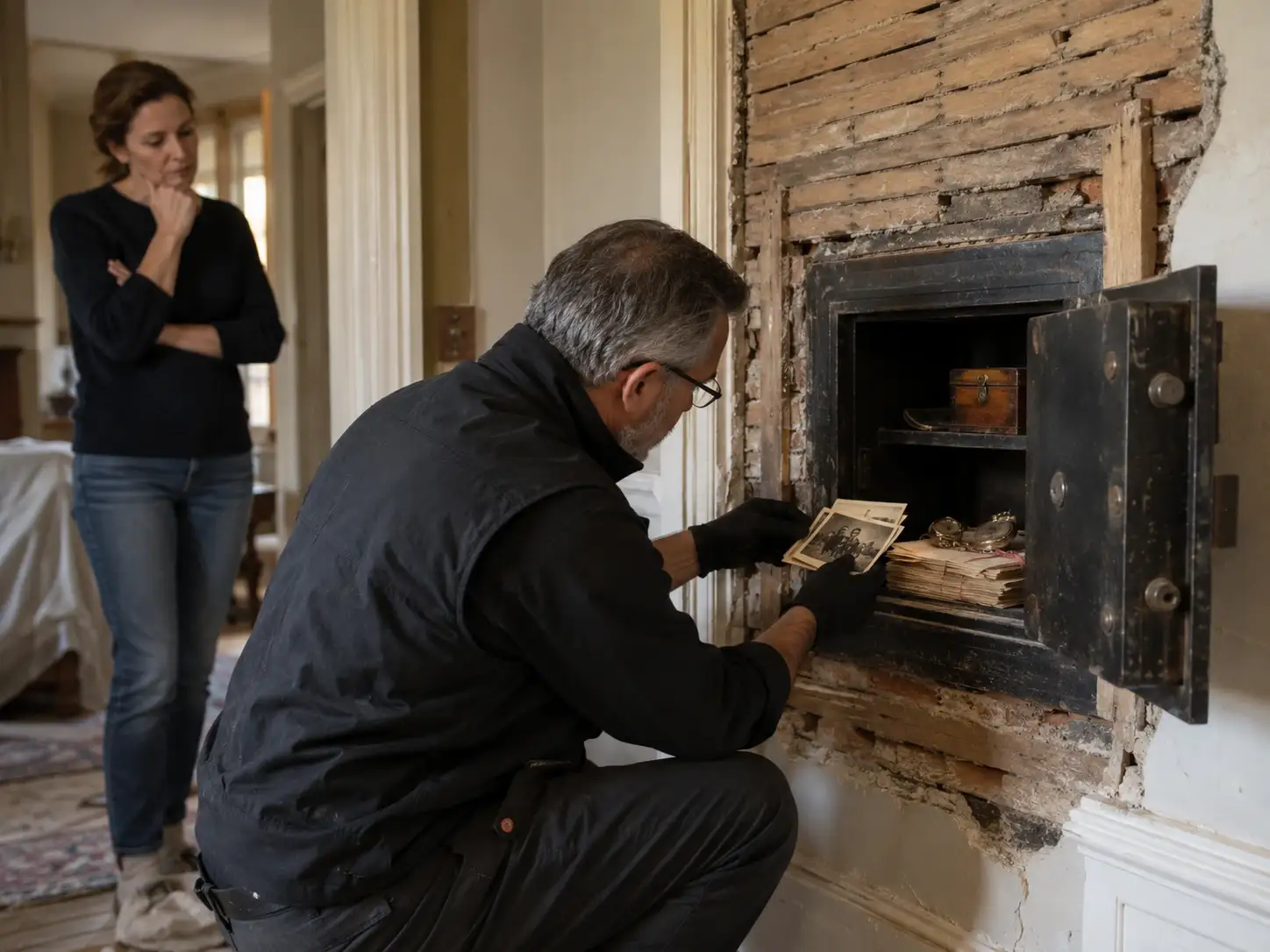
During renovation of an older house, a sealed steel door can appear behind panelling or plaster with no key, combination or service record. The useful first step is not force; it is to document the face, hinges, dial or keyway, surrounding wall and any manufacturer marks, then assess how the mechanism is likely to behave.
Once authority over the property is confirmed, the specialist can examine the door in person and choose an approach intended to limit avoidable damage. After opening, the contents may be ordinary or deeply personal: old documents, photographs and belongings left by previous occupants.
The aim is access with context intact — the fitting, the container and what has been protected inside it.
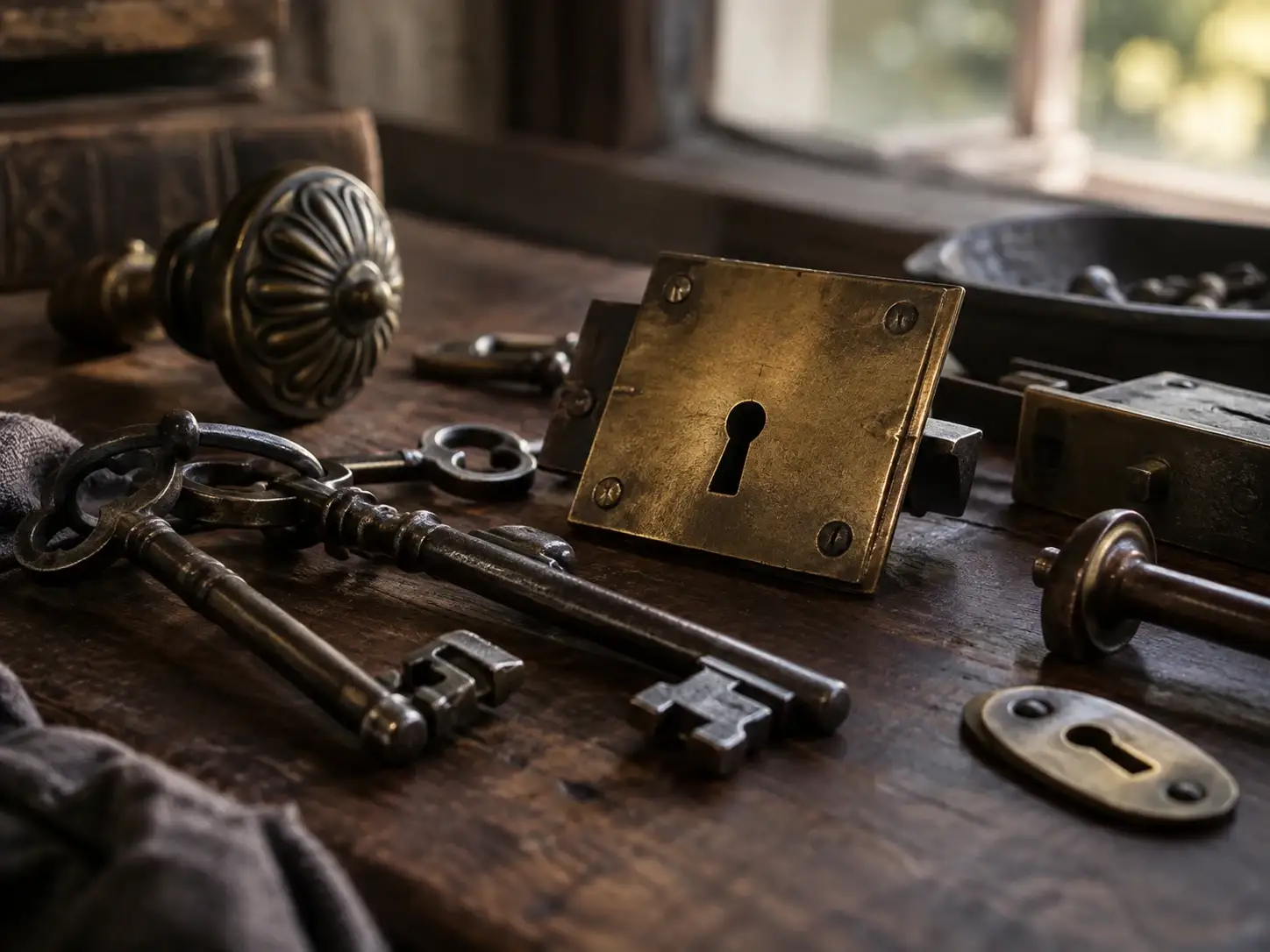
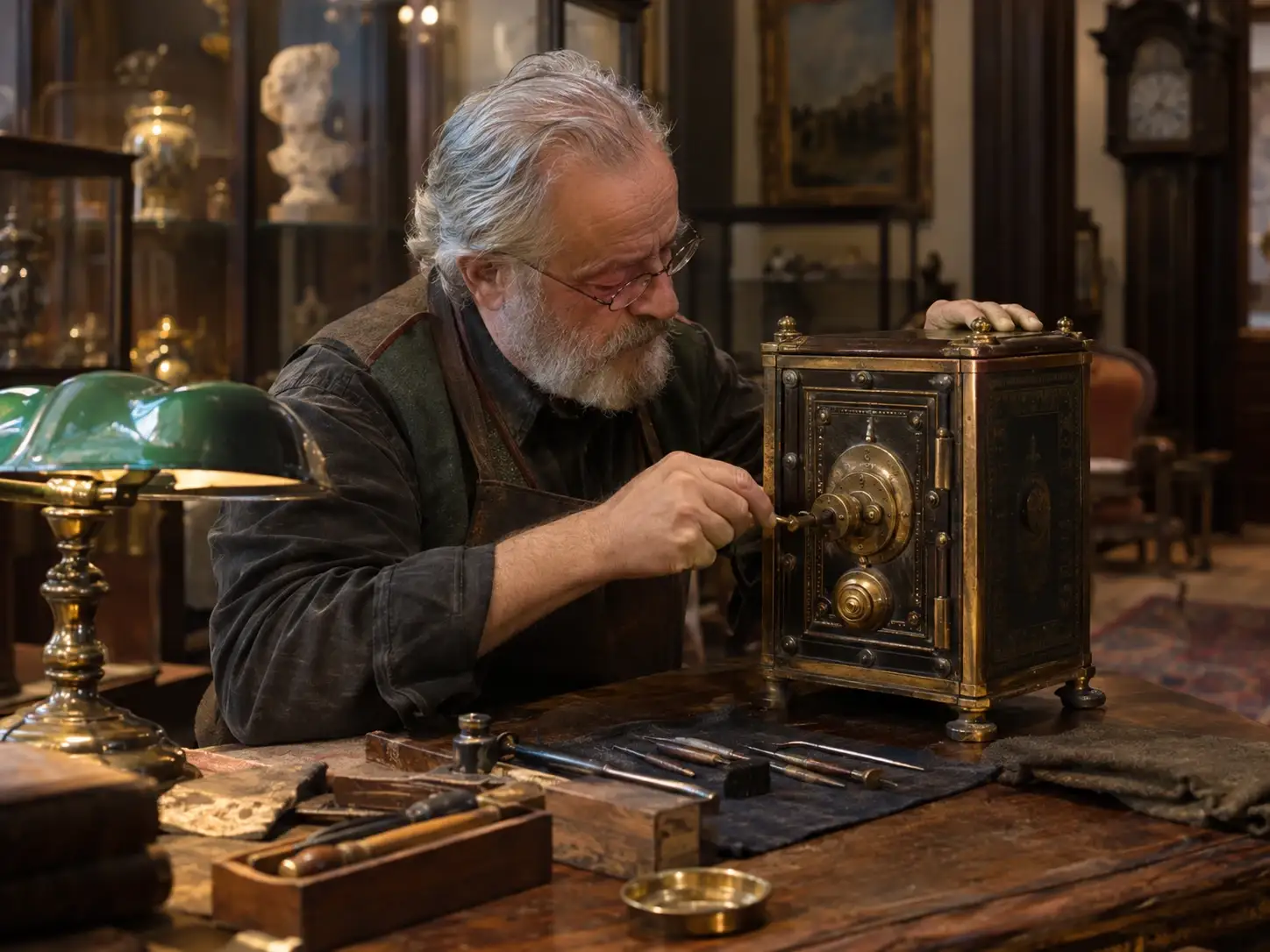
Age, corrosion, seized bolts, past alterations and unknown internal damage can change what is possible. The job is approached to minimise avoidable harm, while being clear about risks that cannot be removed.
Escutcheons, handles, hinges, lock plates and surrounding timber or finish are treated as part of the object. The preferred method considers whether they can remain in place and serviceable.
If hidden construction, unsafe conditions or an unexpectedly fragile mechanism makes the planned method inappropriate, work can be paused and the scope reconsidered rather than escalating damage by default.
The likely presence of papers, photographs, textiles or other vulnerable contents affects tool choice, heat, debris control and how the door is supported during opening.
Rather than publishing a flat rate that ignores the mechanism and condition, the scope is assessed from photographs and access information first. Where a visit is suitable, expected labour, access complexity, preservation risk and any specialist requirements are discussed before work is confirmed.
A photo assessment is useful because old locks often tell us more from visible construction and context than from a short description alone.
No. Condition and construction vary too widely for that promise to be responsible. The assessment is designed to identify a lower-impact route where practical and to explain when some intervention, repair or visible work may be unavoidable.
Send a clear straight-on image of the lock or safe door, a wider photograph showing the entire cabinet, chest or wall location, and close details of markings, hinges, damaged areas or the keyway. Avoid forcing the lock just to obtain a different angle.
A locked safe, chest or fitted storage can contain private property and may form part of an estate, tenancy or collection. Checking authority helps ensure the service is provided only where the requester has a legitimate basis to instruct the work.
Sometimes. Reuse depends on the lock’s condition, the opening method, missing keys or combinations, previous damage and whether internal parts are worn or corroded. The condition after opening can be discussed before any further repair or restoration decisions are made.
Insufficient evidence of authority, unsafe access, unstable structures, hazardous materials, severe mechanism failure or a preservation risk that is disproportionate to the requested outcome may require the work to be delayed, changed or declined.